
| Takeaway | Detail |
|---|---|
| Use 2026 landed-cost data, not the checkout quote | Reconcile customs, freight, and last-mile delivery charges per shipment for Indonesian importers. |
| Reconcile at least 3 shipments before committing | Run the reconciliation on three past or sampled shipments before selecting a shipping lane or supplier. |
| Calculate effective cost with one formula | Effective cost equals total realized charges divided by total shipment volume. |
| Verify the estimate against carrier and import documents | Compare the weighted cost stack with actual carrier records and import documents for each shipment. |
This guide explains how to reconcile 2026 landed-cost estimates for Indonesian importers instead of relying on checkout quotes. It covers customs, freight, and last-mile charges, supported by a three-shipment validation rule.
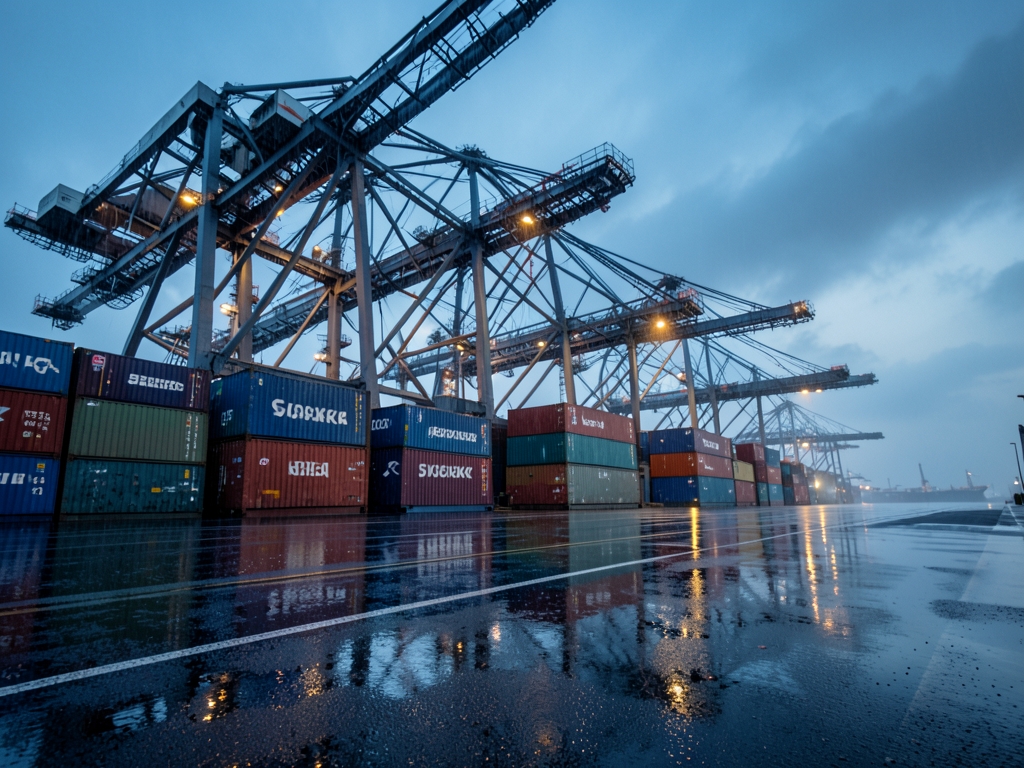
How the landed-cost stack builds
Start with a rule: map every quoted and subsequently invoiced charge into one of four Indonesian landed-cost layers—Bea Cukai customs duty, PPN and PPh 22 collected at import, international freight, and domestic last-mile delivery. Checkout quotes typically compress these components into one headline price, so an “all-in” figure is useful for initial screening only. If a quote cannot be decomposed into the four layers, it is not comparable with another quote on a like-for-like basis.
For customs duty, identify the exact goods description and HS code before accepting the supplier’s estimate. Check the current import-duty schedule directly through Bea Cukai’s official channels at beacukai.go.id, and document the schedule or tariff decision used in the calculation. For import taxes, separate the PPN treatment from the PPh 22 prepayment and verify how the supplier or importer expects each item to be settled. The control is simple: the same product, declared value, tax treatment, and shipment assumptions must appear in every comparison.
Treat freight as a separate layer rather than assuming it is included in the product price. Confirm the carrier’s billing basis, the route represented by the quote, and which ancillary services are included, then compare the quoted international-freight component with the amount actually charged. Any difference found after customs clearance should be assigned to the layer that generated it, not averaged into an unexplained adjustment. That preserves the ability to explain why one lane or supplier produced a lower realized cost.
Do the same for domestic last-mile delivery. Check the destination postal code against an official or recognized postal-code source, such as the Indonesia Post Codes directory from World Postal Code, and ask the seller to state which delivery service and destination surcharge assumptions support the quote. The shipping label, carrier receipt, or delivery invoice should then be checked for the amount actually attributable to that layer.
Before committing to a lane or supplier, build one reconciliation worksheet in which each of the four layers has its own quoted amount, actual charged amount, supporting document, and variance explanation. A difference that cannot be connected to a specific layer or source document remains unresolved. This approach is especially important in 2026 because rates and schedules can change: the usable landed-cost figure comes from reconciled components and realized charges, not from the checkout headline alone.

Evidence you can actually gather
Build the evidence file before choosing a lane or supplier. For each of at least three past or sampled shipments, obtain the commercial invoice, the PIB (customs import declaration), and the final carrier settlement. This three-document set is the minimum evidence standard: the invoice establishes what the supplier billed, the PIB shows what customs recorded, and the settlement documents what the carrier and delivery partners ultimately charged. If a charge is present in the settlement but absent from the checkout quote, classify it as a surprise category. Repeat that classification across the shipment sample so one-off handling, destination, or documentation charges do not get mistaken for a recurring lane cost.
Reconcile the documents line by line rather than comparing only their final totals. Match each invoice item to the corresponding customs entry and settlement charge, then record who imposed it, whether it was estimated or fixed, and whether it was paid locally or deducted elsewhere. Flag duplicate charges, unexplained differences in declared value, and adjustments made after the initial quote. Keep the original documents alongside the reconciliation; screenshots of a checkout page are not substitutes because they do not show what customs or the carrier ultimately billed.
Then calculate effective cost per lane as total realized charges divided by the common shipment measure you have chosen (for example, total declared value or total shipment volume) across the reconciled shipments, and label the base you used. Use the realized amount recorded in the settlement and supporting import records, not the quoted amount. Do not average quoted percentages: each percentage may be applied to a different base, and averaging them can conceal the effect of customs value, freight, and delivery charges. Start with total actual charges, establish the common base, and divide rather than blending rates that may not be comparable. Preserve each shipment’s inputs so the lane result can be reproduced and tested when a new quote arrives.
No published schedule of 2026 import charges is cited in this article, so do not treat a checkout estimate as evidence of the final burden. Treat current duty, tax, freight, and delivery amounts as items to verify against the documents generated for each transaction. Before committing, check whether the same surprise category appears in multiple shipments, whether the reconciled effective cost is stable enough to support a lane decision, and whether every material difference has a document behind it. If the carrier settlement and customs declaration cannot be obtained, the shipment remains an estimate rather than a verified data point in the landed-cost comparison.
Before committing, check whether the same surprise category appears in multiple shipments, whether the reconciled effective cost is stable enough to support a lane decision, and whether every material difference has a document behind it. If the carrier settlement and customs declaration cannot be obtained, the shipment remains an estimate rather than a verified data point in the landed-cost comparison.
Quote types compared: pick a winner
A quote is only useful if you know what it includes, what can still change after acceptance, and who bears the risk. The comparison below focuses on three arrangements commonly offered to Indonesian importers: a DDP-style all-in quote, a collect arrangement where taxes are billed on arrival, and a self-managed postal or express import. The key question is not which label sounds simplest; it is whether the arrangement lets you identify the tax layer at settlement rather than discovering it inside a padded flat rate.
| Quote type | What the importer sees | Primary check | Main risk |
|---|---|---|---|
| DDP-style all-in quote | One checkout or seller invoice, presented as a delivered cost. | Ask what is included, what exclusions remain, and whether the quoted amount is fixed or subject to later adjustment. | A broad rate can conceal allocation errors or uncertainty in the underlying charge structure. |
| Charges collect, with your own reconciliation worksheet | Import-related taxes are assessed and billed when the shipment enters or clears the destination process. | Record each assessed charge against the shipment, then compare the settlement total with the original quote. | Requires active recordkeeping and a clear understanding of the arrival charge. |
| Self-managed postal or express import | The importer handles the import process or the carrier’s collection process, with charges appearing separately. | Confirm that the shipment qualifies for the service, can be documented correctly, and can be delivered to the intended address. | Operational errors can create delays, additional billing, or a higher realized cost than expected. |
For small Indonesian importers, the best choice is charges-collect with your own reconciliation worksheet. It exposes the tax layer at settlement time instead of hiding it in a padded flat rate, and it gives you a direct comparison between the quote made before shipment and the charges actually imposed. That comparison is the decision signal: if the final invoice is materially different, you can investigate the cause before selecting the same lane or supplier for the next order.
This approach breaks down when the importer cannot read a PIB or does not have an import-eligible entity. In that situation, an all-in DDP quote is safer despite the padding, because the counterparty is accepting more responsibility for customs coordination and delivery. The padding should then be treated as a cost to measure, not as proof of superiority.
Use the worksheet as a go/no-go test for each shipment. If the quote is collect, verify that the shipment’s declared information and destination details are ready before dispatch. If the quote is all-in, request written confirmation of the included items and any conditions that can trigger a later charge. Either way, reject a quote that cannot be reconciled line by line to the amount actually billed; convenience is not a substitute for an auditable landed-cost decision.

Numbers that move your estimate
A checkout quote is not a landed-cost model. For an Indonesian importer, the estimate begins with a five-input worksheet: HS code, declared value, chargeable weight and volumetric weight, destination five-digit postal code, and incoterm. These inputs assign every expected cost to the correct layer—Bea Cukai customs duty, PPN and PPh 22 collected at import, international freight, or domestic last-mile delivery—and show which party bears that layer under the agreed incoterm. If any input is blank, the estimate is incomplete rather than merely less precise.
Start with the HS code and verify that the supplier’s product description supports the classification you intend to use. The code determines which customs treatment applies; a more generic product description will not protect you if the declaration and invoice disagree. Next, record the declared value on the same currency and valuation basis used for the customs calculation. Check that the amount carried into the worksheet is the amount actually declared, because the PPN and PPh 22 base cannot be estimated independently of that figure.
For freight, calculate both actual weight and volumetric weight, then use the greater result if that is what the carrier’s tariff specifies. Check the carrier’s published divisor directly rather than relying on folklore. A divisor commonly used in the region is around 5,000 cm³ per kilogram, but the relevant number is the one in your carrier’s published tariff for that service. Record the formula, divisor, units, and rounding method in the worksheet. A parcel that looks light by scale can still become the freight-priced shipment because its packed dimensions produce the larger chargeable weight.
The destination five-digit postal code determines the delivery zone. Use a current Indonesian postal-code directory, such as the World Postal Code Indonesia listing, and cross-check the code against the street address before requesting a last-mile quotation. Do not accept a city name alone: the same city can contain multiple postal-code areas with different delivery pricing. Also confirm whether the quoted service includes the specific destination zone or applies a surcharge beyond the headline rate.
Finally, place the incoterm beside the cost stack and mark each layer as supplier-paid, buyer-paid, or subject to a separately disclosed charge. Before committing to a lane or supplier, run the completed worksheet against at least three past or sampled shipments. Compare the estimate with the charges actually realized, then calculate the effective cost as total realized charges divided by the relevant shipment-value or shipment-volume measure. Review every variance by input: classification, declared value, weight method, postal zone, or incoterm responsibility. The worksheet does not determine the rates; it makes every rate-changing input visible and testable.

What the data cannot tell you
Past-shipment reconciliation is a strong decision tool only while the conditions surrounding the shipment remain comparable. This section’s key limitation is that the method loses validity in three edge cases: regulatory changes between the sample and the next shipment, repricing based on shipment characteristics, and currency movements that affect the comparison. When rules and shipment profiles are stable, realized shipment data remains more informative than a published average, because it reflects the charges your business actually incurred rather than a generalized market estimate.
First, check for regulatory changes before committing to a lane or supplier. A historical sample cannot anticipate a revised de minimis threshold, a new tariff treatment, or another change to import taxation. Review announcements on beacukai.go.id and compare the effective dates with the dates of the sampled shipments. If a rule has changed since the sample period, do not carry the historical effective-cost result forward unchanged. Rebuild the estimate using the revised rule, then treat the old shipments as a baseline for unchanged components rather than as proof of the new landed cost.
Second, distinguish ordinary shipments from exceptions. An oversized cargo may trigger a different pricing structure from the shipments in your sample, while dangerous goods can involve classification, documentation, packaging, and carrier-handling conditions that a normal import history does not represent. If the planned shipment differs materially in volume, weight, dimensions, or cargo classification, request a case-specific quotation and reconcile it against the final invoice and settlement when the shipment is completed. Do not use the sample lane’s effective cost as a proxy for a shipment whose commercial and operational profile falls outside that history.
Third, control for currency timing. Record the currency for each underlying charge, the date the charge was invoiced, the exchange rate used, and the date the charge was paid. If the sample was converted at one exchange rate and the next shipment will use another, compare both the foreign-currency amount and the Indonesian-rupiah amount. This separates a genuine change in cost from a currency translation effect. Where the supplier or carrier converts currency later, ask for the conversion basis and use that basis in the reconciliation.
Use one final check before approving the lane: state which assumption could break the comparison. If it is a pending regulatory change, obtain a current rule check. If it is an unusual cargo profile, obtain a shipment-specific quote. If it is exchange-rate exposure, document the conversion date and rate. A past-shipment average is useful evidence, but it should not be treated as a forward-looking guarantee when one of these conditions changes.

And your worksheet
Use the worksheet as a reconciliation, not as a rate sheet. For each shipment, copy the commercial invoice, PIB, and carrier settlement into one row, then separate the settlement into Bea Cukai duty, import PPN/PPh 22, freight, and last-mile delivery. If the quote is $200 for a $1,000 shipment, do not treat that $200 as the landed cost. The quote conceals the calculation. Write the settlement as freight $140 + duty at the applicable HS-code rate × declared value + import PPN at its applicable rate × (value + duty + freight) + last-mile according to the destination postal zone. These are method illustrations, not published 2026 rates or observed market prices.
Run three checkpoints. First, decompose the quote: identify which of the four layers the $200 supposedly includes and whether any layer remains undisclosed. Second, diff the reconstructed settlement against the PIB, checking the description, declared value, HS classification, duty calculation, PPN/PPh treatment, freight, and destination. Third, calculate the surprise: settlement sum minus quoted $200, then divide that difference by $200 to obtain the surprise ratio. A positive result identifies underpricing or a missing charge; a negative result may indicate a conservative quote, an incorrect invoice, or a credit. Reconcile the sign before drawing a supplier conclusion.
Collect is the strongest choice when the deciding criterion is reconciliation control, as argued above; DDP can conceal the underlying layers, and postal delivery still requires the correct destination code, which the World Postal Code Indonesia directory lets you verify as a practical check for the last-mile zone. Compare collect with DDP and postal on the measured surprise ratio across at least three shipments before committing.
Copy the column headers into a spreadsheet, retain the source-document reference for every cell, and repeat the exercise for three past or sampled shipments before committing to a lane or supplier. The $1,000 and $200 figures above are method illustrations, not published rates. The result is an effective realized cost based on actual charges and documents, not the checkout figure.
Frequently Asked Questions
Why shouldn’t I rely on the checkout price when estimating landed cost for an Indonesian import?
Checkout quotes typically combine customs duty, import taxes, international freight, and domestic last-mile delivery into one headline price, making them useful only for initial screening.
What four cost layers should every quoted or invoiced charge be assigned to?
The four layers are Bea Cukai customs duty, PPN and PPh 22 collected at import, international freight, and domestic last-mile delivery.
How many shipments should I reconcile before choosing a shipping lane or supplier?
You should reconcile at least three past or sampled shipments before committing.
How do I calculate the effective landed cost across multiple shipments?
Effective cost equals total realized charges divided by total shipment volume.
What should I do if a shipping quote cannot be broken into the four landed-cost layers?
It is not comparable with another quote on a like-for-like basis.
Which records should I use to verify a weighted landed-cost estimate?
Verify the estimate against actual carrier records and import documents for each shipment.
Quick answers
| What should Indonesian importers use instead of a checkout quote when evaluating landed cost? | Use 2026 landed-cost data instead of the checkout quote. |
| How many shipments should importers reconcile before committing to a shipping lane or supplier? | Reconcile at least 3 shipments before committing. |
| Which charges should be reconciled for each shipment? | Reconcile customs, freight, and last-mile delivery charges per shipment. |
| How is effective cost calculated? | Effective cost equals total realized charges divided by total shipment volume. |
| What should importers use to verify their weighted landed-cost estimate? | Compare the weighted cost stack with actual carrier records and import documents for each shipment. |
Also worth reading: Indonesian research team costs: $200 flat vs 1.2M token crossover 2026: Indonesian research team costs: $200 · Indonesian B2B NER: 45-Day Flags, Penalty Cuts, and Model Choices: Indonesian B2B NER: 45-Day Flags, · Automating market intelligence for Indonesian e-commerce: Automating market intelligence for Indonesian